| Place of Origin: |
CHINA |
| Brand Name: |
WEILI |
| Certification: |
ISO9001 |
| Minimum Order Quantity: |
1 |
| Price: |
Depending on the model number |
| Packaging Details: |
Wooden box, waterproof |
| Delivery Time: |
20 days |
| Payment Terms: |
30% deposit,pay the 70% balance before delivery |
| Supply Ability: |
Advanced manufacturing capabilities for large-scale orders |
Description
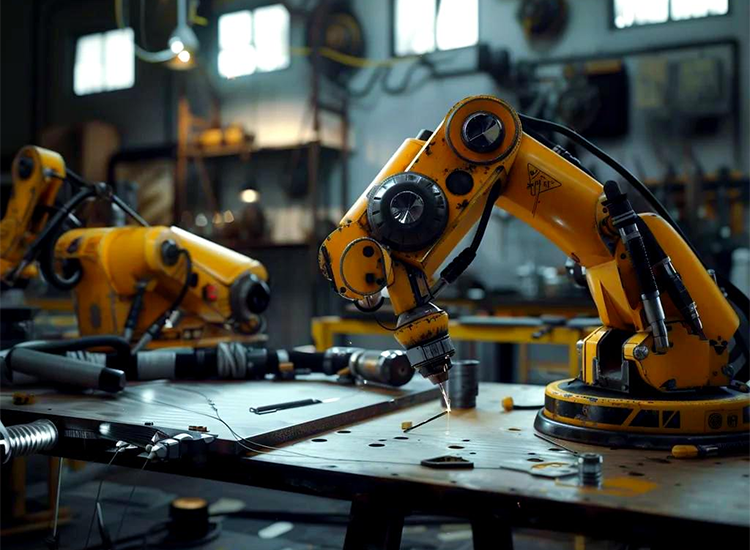
Welding robots are stars in the field of industrial automation and are widely used in industries such as automotive, shipbuilding, aerospace, and heavy machinery. They can efficiently and accurately complete welding tasks, significantly improving production efficiency and product quality. Welding robots can be classified into various types based on different criteria.
Categorized by structural form
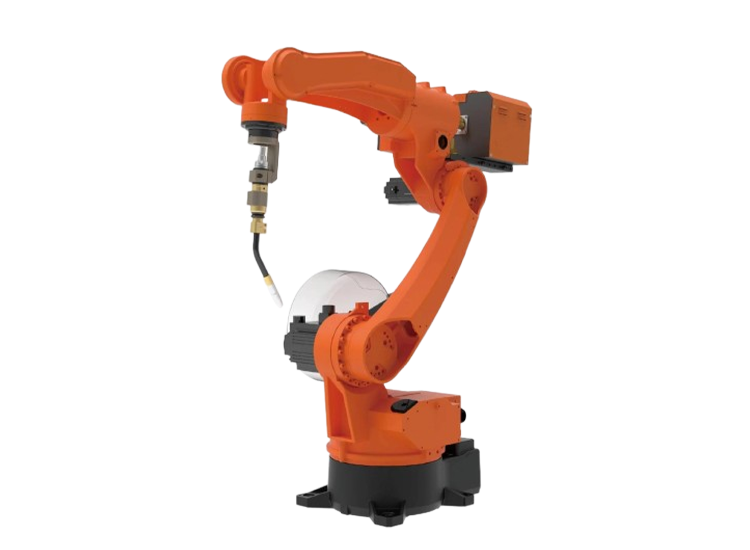
1. Joint-type welding robot: Equipped with multiple rotating joints, similar to a human arm, these robots offer high flexibility and adaptability, enabling them to perform complex welding tasks. They are typically equipped with precise sensors and control systems to ensure accuracy and stability in the welding process.
2. Right-angle coordinate type welding robot: Moves along three mutually perpendicular axes, forming a right-angle coordinate system. They are suitable for performing linear or simple curved welding tasks. The structure is simple and the cost is low, making them suitable for simple welding operations in large-scale production environments.
3. Cylindrical Coordinate Type Welding Robot: Moves along a vertical axis and a horizontal axis, with an additional rotational axis. It is suitable for performing circular or helical welding tasks, such as welding cylindrical objects like pipes and containers.
Categorized by application domain
1. Spot welding robot: Primarily used for performing spot welding tasks, suitable for thin plate welding in industries such as automotive manufacturing and household appliances. They typically offer high welding speeds and precision, meeting the demands of mass production.
2. Arc welding robot: Primarily used for performing arc welding tasks such as manual arc welding and gas-shielded welding. They are suitable for welding various materials, including metals and alloys, and are often equipped with automatic wire feeding systems and welding power sources to ensure a stable welding process.
3. Laser welding robot: Utilizes a laser beam for welding, offering advantages of high precision, high speed, and high efficiency. They are suitable for high-precision, high-quality welding tasks in industries such as electronics and precision instruments.
Classification based on control method
Teach-and-repeat type welding robot: By using manual teaching, the welding path, speed, and posture information are stored in the robot's control system. During the actual welding process, the robot replicates the teaching process based on the stored information to complete the welding task. This type of robot is simple to operate and easy to master, but its adaptability might be limited for complex and variable welding tasks.
Different types of welding robots have their own strengths, and choosing the right one that meets one's specific needs is crucial for improving production efficiency.
 EN
EN