 EN
EN

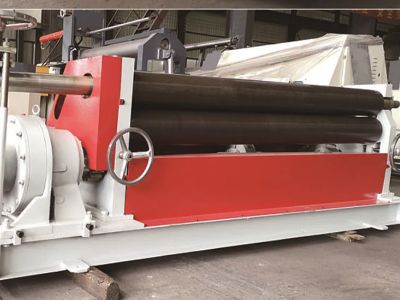
3 Roller vs 4 Roller Rolling Machine
Choosing the right rolling machine is important for businesses involved in metalworking and manufacturing. Different projects require different levels of control, capacity, and precision. WEILI offers both 3 roller and 4 roller rolling machines, giving buyers options for different production requirements. Understanding how these machines work, their common operating challenges, performance differences, and selection factors can help you choose equipment that fits your application.
What Is the Difference Between 3 Roller and 4 Roller Rolling Machines?
The main difference between a 3 roller and 4 roller rolling machine is the number and arrangement of rollers used to shape metal. A 3 roller machine uses three rollers arranged to guide and bend metal sheets. The position of the rollers determines the curvature and final shape of the material. This design is commonly used for creating cylindrical and conical forms. A 3 roller rolling machine can be a practical choice for businesses handling general metalworking tasks. It can process different materials and create curved components for various applications. However, depending on the machine design, operators may need to reposition the material or make additional adjustments to achieve the required shape.
A 4 roller rolling machine adds another roller to the system. The additional roller provides greater control when positioning and bending the material. This can make the process more stable and help operators achieve consistent results. One important advantage of a 4 roller rolling machine is improved material control. The additional roller can help hold the sheet securely while the bending operation takes place. This can reduce material movement and make it easier to produce consistent curves. The two machine types can also differ in setup and operating methods. A 3 roller machine may be suitable for straightforward applications where the required shapes are relatively simple. A machine rolling can be more suitable for projects where positioning accuracy, repeatability, and efficient production are priorities. Cost is another consideration. A 4 roller rolling machine can require a higher initial investment because of its additional components and more advanced design. However, the increased control and productivity may justify the investment for businesses with demanding production requirements. Before choosing between the two, consider the material thickness, required shape, production volume, desired accuracy, available workspace, and budget. These factors will help you determine whether a 3 roller or 4 roller design is more appropriate.
Common Usage Issues With 3 Roller and 4 Roller Rolling Machines
Both types of rolling machine can experience operating challenges if they are not configured or maintained correctly. One issue that can occur with a 3 roller machine is uneven bending. If the material is not positioned correctly or the rollers are not properly adjusted, the finished component may not have the desired curvature. Operators may also need to make several adjustments when working with certain shapes or materials. This can increase production time, particularly when processing a large number of components. A 4 roller rolling machine provides greater material control, but proper setup is still important. If the rollers are not correctly aligned, the sheet may not bend evenly. Incorrect settings can affect the final dimensions and shape of the workpiece. Operator training is another important factor. A 4 roller machine can have more controls and operating procedures than a basic 3 roller machine. Workers should understand the machine's controls, material limitations, safety requirements, and recommended settings before beginning production.
Regular maintenance can help prevent many operating problems. Keep the rollers clean and inspect them regularly for wear or damage. Dirt, metal particles, and other debris can affect how the material moves through the machine. It is also important to follow the manufacturer's operating instructions. Every rolling machine has specific limits regarding material thickness, width, strength, and bending capacity. Exceeding these limits can cause poor results or unnecessary machine wear. By providing proper operator training and following a regular maintenance schedule, manufacturers can improve machine performance and reduce avoidable production problems.
Advantages and Performance of a 4 Roller Rolling Machine
A 4 roller rolling machine offers several advantages for businesses that need greater control during metal forming. One of its main benefits is improved material positioning. The additional roller helps hold the sheet more securely, allowing the operator to control the bending process more effectively. This can be particularly useful when producing cylinders, cones, and other curved components. Better control can reduce the need for repeated adjustments, helping operators complete jobs more efficiently. Another benefit is productivity. A 4 roller rolling machine can reduce some of the manual handling required during the rolling process. This can be especially valuable for businesses producing multiple components with the same specifications.
The machine can also provide consistent results when properly configured. Consistency is important for wholesale manufacturing because customers often expect multiple components to have the same dimensions and appearance. Material capacity should also be considered. Some 4 roller machines are designed to handle thicker and stronger materials, but the actual capacity depends on the machine model. Buyers should always review the manufacturer's specifications rather than assuming that every 4 roller machine can process heavy materials.
Compared with a 3 roller rolling machine, a 4 roller model may offer better control for demanding applications. However, this does not mean that a 3 roller machine is unsuitable. A metal rolling machine can be a cost-effective solution for businesses working with thinner materials, simpler shapes, or smaller production volumes. Performance therefore depends on the application. If your business mainly handles straightforward bending jobs, a 3 roller rolling machine may provide everything you need. If your production involves complex shapes, repeated components, or demanding materials, a 4 roller model may provide greater efficiency and control. WEILI offers both 3 roller and 4 roller options, allowing buyers to compare equipment based on their specific production requirements.
Common Mistakes When Choosing a Rolling Machine
One of the most common mistakes when purchasing a rolling machine is focusing only on the initial price. A cheaper machine may appear attractive, but it may not provide the capacity, durability, or features required for your production. Choosing equipment based only on price can result in higher maintenance or replacement costs later. Instead, consider the machine's overall value. Review its construction, working capacity, available features, expected maintenance requirements, and supplier support. A reliable machine can provide better long-term value even when its initial purchase price is higher.
Another mistake is failing to consider the type of material being processed. If you primarily work with thin metal sheets and simple shapes, a 3 roller rolling machine may be sufficient. However, projects involving thicker materials, complex curves, or higher production volumes may require the additional control provided by a 4 roller design. Available workspace should also be considered. Before purchasing a rolling machine, measure your facility carefully. Leave enough room around the equipment for operators to load and remove materials safely. You should also consider how raw materials and finished components will be moved around the machine. Production volume is another important factor. A machine suitable for occasional work may not be the best choice for continuous industrial production. Think about how many components you need to produce each day and how quickly the machine must complete each operation. Finally, research the supplier and read customer feedback where available. Reviews can provide useful information about machine performance, service, and reliability. You should also ask suppliers about installation, training, spare parts, warranty coverage, and technical support.
WEILI provides both 3 roller and metal sheet rolling machine solutions for different metalworking requirements. By comparing machine capacity, material compatibility, production needs, workspace, price, and supplier support, you can make a more informed purchasing decision and choose equipment that supports efficient and reliable manufacturing.